Since the global spread of the new coronavirus pneumonia epidemic, consumers'awareness of sterilization and disinfection has rapidly increased, and epidemic prevention business opportunities have driven a surge in demand for UVC LED series products, which has promoted global efforts to invest in research and development of UVC LED technology, and has also spawned a variety of products.
In the selection of heat dissipation substrate materials, UVC LED packaging is different from general LEDs. Due to the low photoelectric conversion efficiency of UVC LEDs, most of them are converted into heat, so aluminum nitride heat dissipation substrates with high thermal conductivity are generally used. It is also worth noting that some manufacturers use alumina heat dissipation substrates. Both aluminum nitride and alumina substrates are ceramic substrates. The main difference between the two is that the thermal conductivity of aluminum nitride is much higher than that of alumina. Among them, the thermal conductivity of AlN aluminum nitride ceramic is generally about 140-170W/mK, while the thermal conductivity of Al2O3 aluminum oxide ceramic is only about 25-30W/mK.
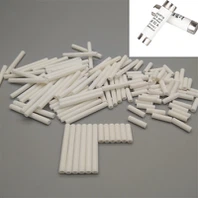
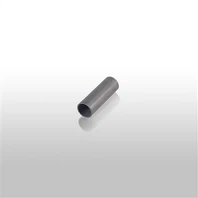
Alumina ceramics are generally white with low thermal conductivity and are usually used in low-power products. However, alumina ceramics are more brittle and more easily broken than aluminum nitride ceramic, so corners are prone to chipping during the dicing and cutting process. Aluminum nitride ceramics are generally gray-black, with high thermal conductivity, and are usually used in high-power products. In addition, there are also alumina ceramics doped with carbon powder on the market, which are also gray-black, but with lower thermal conductivity.
UVC LED is sensitive to heat, and its external quantum efficiency (EQE) is low. Only a small part of the electric energy is converted into light, and most of the electric energy is converted into heat, which directly affects the service life of the chip. In view of this, at this stage, many products are based on flip-chip solutions with high thermal conductivity aluminum nitride substrates. Aluminum nitride has excellent thermal conductivity, can withstand the aging of the ultraviolet light source itself, and can meet the needs of high thermal management of UVC LEDs.