

Ceramic Substrates
UNIPRETEC is a professional manufacturer of high-performance ceramic substrates for electronic, electrical, and power applications. Our ceramic substrate product series includes Al2O3 Alumina Substrates, AlN Aluminum Nitride Substrates, and Si3N4 Silicon Nitride Substrates, engineered to meet demanding requirements for electrical insulation, thermal management, and mechanical reliability.
Ceramic substrates play a critical role in modern electronic systems by serving as both a structural platform and a functional material for heat dissipation, electrical insulation, and circuit integration. UNIPRETEC ceramic substrates are widely used in power electronics, RF devices, LED modules, automotive electronics, and advanced electronic packaging.
Advancements in Ceramic Substrate Technology
Recent advancements in materials science and manufacturing processes have significantly improved the performance of ceramic substrates. Nanostructured ceramics enable precise control of microstructure, resulting in higher dielectric performance, improved thermal conductivity, and reduced signal loss.
Metallization & Custom Manufacturing Capability
UNIPRETEC ceramic substrates offer excellent metallization compatibility, supporting processes such as thick film, thin film, DBC, DPC, and AMB. We provide customized ceramic substrate solutions including size, thickness, surface finish, metallization patterns, and performance optimization according to customer specifications.
Quality Assurance & Technical Support
All ceramic substrates are manufactured under strict quality control systems and undergo comprehensive inspections including dimensional accuracy, thermal performance, electrical testing, and reliability evaluation. Our technical team supports customers from material selection to application optimization.
Future Outlook of Ceramic Substrates
With the rapid development of 5G communication, IoT devices, energy storage systems, and automotive electronics, ceramic substrates will continue to play a vital role in enabling compact, high-performance, and reliable electronic systems.
UNIPRETEC remains committed to advancing ceramic substrate technology and delivering high-quality, application-oriented ceramic solutions for global customers.
-
![Direct Plated Copper Ceramic]()
Direct Plated Copper Ceramic
Direct-plated copper ceramics combine the excellent electrical conductivity of copper with the inherently superior thermal and mechanical properties of ceramics, making them ideal for applicationsAdd to Inquiry -
![High Dielectric Constant Ceramic Substrate]()
High Dielectric Constant Ceramic Substrate
Dielectric constant is a measure of a material's ability to store electrical energy in an electric field. Ceramic substrates are ideal for applications requiring high dielectric constant, lowAdd to Inquiry -
![ZTA Ceramic Substrate]()
ZTA Ceramic Substrate
Zirconia toughened alumina can be used as a substrate material for electronic components in the field of microelectronics, power electronics, LED packaging, semiconductor processing equipment andAdd to Inquiry -
![Thick Film Alumina Ceramic Substrate]()
Thick Film Alumina Ceramic Substrate
Thick film alumina ceramic substrates are critical components in electronic applications. The thick film refers to the process of depositing and firing multiple layers of conductive and insulatingAdd to Inquiry -
![Sintered Ceramic Substrate]()
Sintered Ceramic Substrate
Sintered ceramic substrates are mainly made of finely ground ceramic powder through processes of shaping, drying, sintering and mechanical processing. They can be widely used in electronic products,Add to Inquiry -
![Ceramic Substrate Alumina Substrate]()
Ceramic Substrate Alumina Substrate
Ceramic alumina substrate has high thermal conductivity, making it an excellent choice for applications where heat dissipation is critical; it also provides electrical insulation and good mechanicalAdd to Inquiry -
![IGBT Ceramic Substrate]()
IGBT Ceramic Substrate
Insulated gate bipolar transistors (IGBTs) are key components in modern power electronics, and the ceramic substrate for mounting them serves as the basis of IGBT modules, preventing electrical shortAdd to Inquiry -
![Alumina Ceramic Substrate Sheet]()
Alumina Ceramic Substrate Sheet
Alumina ceramic substrate sheets are typically manufactured through a process that sinters fine particles of aluminum oxide at high temperatures, resulting in a dense crystal structure with highAdd to Inquiry -
![Silicon Nitride Substrate]()
Silicon Nitride Substrate
Silicon nitride substrate is widely used in the electronics industry, especially in the production of integrated circuits, semiconductor devices and electronic packaging. It is also ideal forAdd to Inquiry -
![Alumina Thin Film Substrate]()
Alumina Thin Film Substrate
The unique combination of properties of alumina thin film substrate, including high dielectric constant, excellent thermal conductivity, chemical stability and mechanical strength, makes it the firstAdd to Inquiry -
![AlN Substrate]()
AlN Substrate
AlN (aluminum nitride) is a wide bandgap semiconductor material that has attracted much attention in various electronic and optoelectronic devices. They have high thermal conductivity, higher thanAdd to Inquiry -
![AlN Ceramic Plate]()
AlN Ceramic Plate
AlN ceramic plates have excellent thermal conductivity, high resistivity, impressive mechanical strength, and dielectric properties. They are commonly used in electronic components, heat sinks,Add to Inquiry

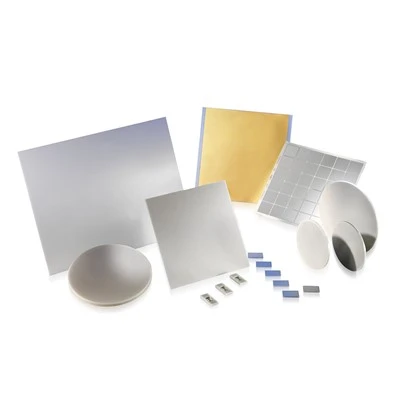


What Are Ceramic Substrates?
Ceramic substrates are high-performance materials used in electronic and power applications. UNIPRETEC offers Al2O3 Alumina, AlN Aluminum Nitride, and Si3N4 Silicon Nitride substrates that provide exceptional electrical insulation, thermal conductivity, and mechanical strength. These substrates form the foundation for circuits, power modules, sensors, RF devices, and advanced electronic components.
Ceramic Substrates Specifications
This table provides the specifications for the different types of ceramic substrates: Al2O3 (A960, A996), AlN, and Si3N4. These substrates are used for various high-performance applications such as PCBs, semiconductors, sensors, automotive, electronics, and resistors.
| ITEM | UNIT | A960 | A996 | ALN | SI3N4 |
|---|---|---|---|---|---|
| Main Content | - | AI2O3 > 96% | AI2O3 > 99.6% | AIN > 95% | SI3N4 |
| Density | g/cm3 | > 3.7 | > 3.88 | > 3.3 | > 3.17 |
| Color | - | White | White | Grey | Grey |
| Water Absorption | % | 0 | 0 | 0 | 0 |
| Warpage | - | < 2‰ | < 2‰ | < 2‰ | < 2‰ |
| Surface Roughness (Ra) | um | 0.2 - 0.7 | < 0.025 | 0.3 - 0.6 | < 0.8 |
| Thermal Conductivity (25°C) | W/m.K | > 25 | > 30 | > 175 | > 80 |
| Thermal Expansion Coefficient (25 - 300°C) | 10-6 mm/°C | 6.5 - 7.5 | 7.2 | 2 - 3 | 11 - 13 |
| Thermal Expansion Coefficient (300 - 800°C) | 10-6 mm/°C | 6.5 - 8.0 | 7.5 | 2.5 - 3.5 | 11 - 13.5 |
| Max. Working Temperature | °C | 1,200 | 1,200 | 1,200 | 1,200 |
| Dielectric Strength | KV/mm | > 17 | > 17 | > 17 | > 19 |
| Dielectric Constant | 1 MHz | 9 - 10 | 9.9 | 17 | 7.8 |
| Electrical Resistivity (25°C) | Ω·cm | > 1014 | > 1014 | > 1014 | > 1014 |
Features of Ceramic Substrates
Excellent Electrical Insulation
Ceramic substrates effectively prevent electrical leakage and short circuits, making them ideal for high-voltage and high-frequency applications.
High Thermal Conductivity
Aluminum Nitride and Silicon Nitride substrates excel at dissipating heat, ensuring stable operation for high-power electronic modules and LED devices.
Low Coefficient of Thermal Expansion (CTE)
Ceramic substrates exhibit minimal expansion under temperature changes, reducing stress on electronic components and enhancing long-term reliability.
High Temperature Resistance
These substrates maintain structural and electrical performance even at elevated temperatures, suitable for automotive, aerospace, and industrial electronics.
Good Metallization Compatibility
UNIPRETEC ceramic substrates support thick-film, thin-film, DBC, and AMB metallization processes, enabling complex circuit integration and power device assembly.
Ceramic Substrate Material Categories
Explore our high-performance ceramic substrates categorized by material type.

Al2O3 Alumina Substrates
Our Al2O3 ceramic substrates provide excellent electrical insulation, high thermal conductivity, low thermal expansion, and strong metallization capacity. They are ideal for PCB, power electronics, and microwave applications.

AlN Aluminum Nitride Substrates
AlN substrates offer extremely high thermal conductivity and excellent insulation. They are suitable for high-power electronics, LEDs, and applications requiring rapid heat dissipation.

Si3N4 Silicon Nitride Substrates
Si3N4 substrates have excellent mechanical strength, thermal shock resistance, and high-temperature stability. They are widely used in aerospace, sensors, and advanced semiconductor applications.
Ceramic Substrates
This series of products includes Al2O3 Alumina Substrates, AlN Aluminum Nitride Substrates, and Si3N4 Silicon Nitride Substrates. The ceramic substrates are known for their excellent electrical insulation, high thermal conductivity, low coefficient of thermal expansion, high operating temperatures, and good metallization capacity, making them highly effective in a range of applications.
Typical Applications of Ceramic Substrates
Printed Circuit Boards (PCB)
Ceramic substrates are widely used in PCBs, especially in high-power and high-frequency circuits, due to their excellent insulation and thermal conductivity properties. These substrates are crucial in ensuring the reliability and performance of electronic devices.
Semiconductors
Aluminum Nitride (AlN) substrates, in particular, are commonly used in semiconductor devices due to their ability to manage heat effectively and provide electrical insulation, making them essential in high-performance electronic components.
Sensors
Ceramic substrates are also employed in various sensor applications, particularly in automotive, environmental, and medical sensors. Their thermal and electrical properties ensure high accuracy and durability in harsh operating environments.
Automotive
In the automotive industry, ceramic substrates are used for high-performance components like ignition systems, fuel cells, and power electronics. Their thermal resistance and mechanical strength make them indispensable in automotive applications.
Electronics
Ceramic substrates are essential in modern electronics, providing support for components like LEDs, power modules, and microelectronics. Their ability to withstand high temperatures and their insulating properties are key to enhancing the performance and longevity of electronic products.
Resistors
Ceramic substrates are also used in resistors, especially in high-power resistor elements, due to their excellent heat dissipation properties. They help prevent overheating and improve the efficiency and lifespan of resistors in power systems.

Advancements in Ceramic Substrates
Recent advancements in materials science and manufacturing techniques have led to notable improvements in high-dielectric-constant ceramic substrates. Nanotechnology has played a significant role in enhancing the performance of these substrates by allowing for the precise control of material properties at the nanoscale. Nanostructured ceramics exhibit improved dielectric properties, enabling higher capacitance and reduced signal loss.
Furthermore, researchers have explored the use of composite materials to achieve tailored dielectric properties. Combining different ceramics or incorporating additives can lead to substrates with enhanced performance, such as improved thermal conductivity or reduced dielectric losses.

Why Choose Our Ceramic Substrates
Our ceramic substrates are designed with high-dielectric-constant materials, offering exceptional electrical insulation and thermal management properties. These advanced substrates are ideal for use in high-performance electronic applications such as PCBs, semiconductors, sensors, and automotive electronics.
By incorporating nanotechnology and composite materials, we offer substrates that provide superior performance in reducing signal loss and enhancing thermal conductivity. Our substrates meet the growing demands of emerging technologies like 5G, IoT, and energy storage, making them an ideal choice for next-generation electronic devices.
Everything You Need to Know About Ceramic Substrates
This FAQ section answers the most common technical, application, and purchasing questions related to ceramic substrates, including Al2O3 Alumina, AlN Aluminum Nitride, and Si3N4 Silicon Nitride substrates.
What are ceramic substrates?
Ceramic substrates are high-performance materials used in electronics and other industries, offering excellent electrical insulation, high thermal conductivity, and mechanical strength.
What types of ceramic substrates are available?
We offer a variety of ceramic substrates, including Alumina (Al2O3), Aluminum Nitride (AlN), and Silicon Nitride (Si3N4), each with unique properties suited for specific applications.
What are the applications of ceramic substrates?
Ceramic substrates are used in a variety of applications, including PCBs, semiconductors, sensors, automotive electronics, power electronics, and more.
Why is high thermal conductivity important for ceramic substrates?
High thermal conductivity allows ceramic substrates to efficiently dissipate heat, which is crucial for maintaining the performance and reliability of electronic devices.
Can ceramic substrates be customized?
Yes, ceramic substrates can be customized in terms of size, thickness, shape, and surface finish to meet specific requirements for various applications.
What is the difference between AlN and Al2O3 substrates?
Aluminum Nitride (AlN) substrates offer higher thermal conductivity compared to Alumina (Al2O3) substrates, making them ideal for high-power and high-performance applications.
How do ceramic substrates improve device performance?
Ceramic substrates enhance device performance by providing excellent insulation, heat dissipation, and stability, which is essential for improving reliability and extending the lifespan of electronic components.
What is the coefficient of thermal expansion (CTE) of ceramic substrates?
Ceramic substrates typically have a low coefficient of thermal expansion, which helps to maintain dimensional stability in high-temperature applications.
What are the benefits of using Si3N4 silicon nitride substrates?
Si3N4 substrates provide high thermal conductivity, excellent mechanical strength, and outstanding resistance to thermal shock, making them suitable for demanding applications.
What are the primary uses of ceramic substrates in automotive electronics?
Ceramic substrates are used in automotive electronics for power modules, sensors, and LED lights, where their heat resistance and electrical insulation properties are essential.
What is the maximum temperature that ceramic substrates can handle?
Ceramic substrates can typically handle temperatures up to 1000°C or more, depending on the material used, such as AlN, Al2O3, or Si3N4.
How does surface finish affect the performance of ceramic substrates?
A smooth surface finish ensures optimal electrical insulation and minimal signal loss, while rough surfaces can enhance heat dissipation for specific applications.
Are ceramic substrates environmentally friendly?
Yes, ceramic substrates are environmentally friendly as they are non-toxic, non-reactive, and can be disposed of safely without causing harm to the environment.
What is the cost of ceramic substrates?
The cost varies depending on the material type, size, and customization requirements. Alumina is typically more cost-effective than aluminum nitride and silicon nitride.
What are the key factors to consider when choosing ceramic substrates?
Consider factors like thermal conductivity, electrical insulation properties, mechanical strength, and cost when selecting a ceramic substrate for your application.
What is the difference between AlN and Si3N4 substrates?
AlN substrates offer better thermal conductivity than Si3N4, while Si3N4 substrates have superior mechanical properties and thermal shock resistance.
How do ceramic substrates contribute to energy storage applications?
In energy storage systems like supercapacitors, ceramic substrates improve charge storage capacity and thermal management.
What is the role of ceramic substrates in 5G technology?
Ceramic substrates are essential in 5G technology for providing high-frequency performance, thermal management, and reliability in electronic devices.
Are ceramic substrates suitable for high-frequency applications?
Yes, ceramic substrates with high dielectric constants and low loss factors are ideal for high-frequency applications like RF circuits and 5G communication.
Can ceramic substrates withstand high temperatures?
Yes, ceramic substrates are highly resistant to high temperatures, with some materials able to withstand temperatures over 1000°C without degradation.
As one of the most professional ceramic substrates manufacturers and suppliers in China, we're featured by good service and competitive price. Please rest assured to wholesale high quality ceramic substrates for sale here from our factory.
