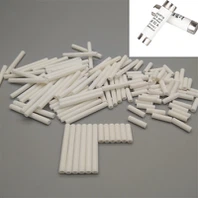
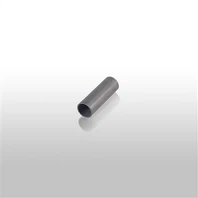
Ceramic, also called porcelain, is commonly used to make fuse tubes in electrical fuses, most often in low- to medium-voltage applications, or where cost-effectiveness is a priority without compromising safety and functionality, because it has several desirable properties.
Advantages of ceramic tube to manufacture fuses
Ceramic is an excellent insulator, ensuring that the fuse tube is non-conductive, which is critical to the safe operation of the fuse. It has good heat dissipation properties and high resistance to thermal shock. Ceramic is resistant to high temperatures and can withstand the high temperatures generated during fuse operation, such as when the fuse element melts to interrupt the circuit. It has sufficient mechanical strength to withstand the pressure and stress during operation when the arc is formed and extinguished inside the tube. And, ceramic is combined with internal fillers such as silica or arc-extinguishing materials to help effectively extinguish the arc generated during the operation of the fuse. Ceramic materials can resist environmental factors such as moisture, heat and chemical corrosion, making them durable in harsh conditions.


Materials and sizes of ceramic tube sleeve for fuse
Unipretec provides a variety of alumina ceramic materials such as 50% alumina, 60% alumina, 70% alumina, 75% alumina, 85% alumina, 90% alumina, 95% alumina to manufacture fuse tubes. It can flexibly produce tubes of different sizes to meet different application requirements. It has high production efficiency and high output. Therefore, ceramic fuse tubes are a very economical choice, especially suitable for medium-sized applications that do not require extremely high performance materials.

Contact Information
If you have any questions about products or services, please contact us immediately and we will reply to you within the first time.
Address: No.153, Yuehua Road, Huli District, Xiamen, China
Tel: +0086 18650119402
Email: info@unipretec.com