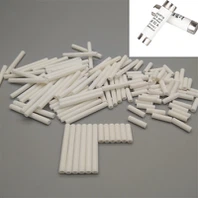
Zirconia ceramics, also known as zirconium oxide ceramics, are a versatile class of materials with excellent mechanical, thermal, and chemical properties. These ceramics find applications in various industries, including aerospace, medical, automotive, and electronics. There are several types of zirconia ceramics, each tailored to specific requirements and applications.
1. Yttria-Stabilized Zirconia (YSZ)
YSZ is one of the most common types of zirconia ceramics. It is stabilized with yttria (yttrium oxide) to prevent phase transformations at high temperatures. YSZ exhibits high strength, hardness, and excellent resistance to wear and corrosion. This makes it suitable for applications such as cutting tools, dental implants, and thermal barrier coatings in gas turbine engines.
2. Magnesia-Stabilized Zirconia (MSZ)
Magnesia-stabilized zirconia incorporates magnesia (magnesium oxide) as a stabilizing agent. This type of zirconia ceramic offers enhanced thermal shock resistance and is commonly used in refractory applications, such as crucibles and furnace linings.
3. Calcia-Stabilized Zirconia (CSZ)
Calcia-stabilized zirconia, stabilized with calcium oxide, exhibits improved resistance to high-temperature deformation. It is often used in applications requiring good thermal insulation, such as kiln furniture and insulating refractories.
4. Ceria-Stabilized Zirconia (CSZ)
Ceria-stabilized zirconia incorporates cerium oxide as a stabilizing agent. This type of zirconia ceramic is known for its high oxygen ion conductivity, making it suitable for applications in solid oxide fuel cells and oxygen sensors.
5. Partially Stabilized Zirconia (PSZ)
PSZ contains a lower concentration of stabilizing agents compared to fully stabilized versions. This results in a balance of mechanical and thermal properties, making it suitable for applications where toughness is a critical factor, such as in ceramic bearings and cutting tools.
6. Tetragonal Zirconia Polycrystals (TZP)
TZP is a high-performance zirconia ceramic known for its exceptional mechanical strength and toughness. It undergoes a transformation from a tetragonal to a monoclinic crystal structure under stress, allowing it to absorb energy and resist crack propagation. This property makes TZP ideal for demanding applications such as hip implants and structural components in aerospace.
7. Nanostructured Zirconia
Nanostructured zirconia involves manipulating the grain size at the nanoscale to enhance properties like strength, hardness, and toughness. This type of zirconia is used in cutting-edge applications, including advanced ceramics for electronics and nanocomposites.
In conclusion, the diverse types of zirconia ceramics cater to a wide range of industrial needs, offering unique combinations of properties to meet specific application requirements. The continuous development of these materials ensures their relevance and usefulness in emerging technologies and industries.