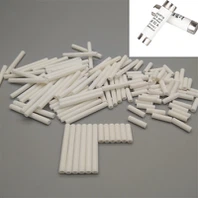
Silicon nitride ceramic is a high-performance technical ceramic material renowned for its exceptional properties and wide range of applications. In this article, the composition of silicon nitride ceramic, as well as its chemical structure, manufacturing methods, and the impact of composition on its properties are introduced.
Chemical Structure of Silicon Nitride Ceramic
Silicon nitride ceramic (Si3N4) is a covalent compound consisting of silicon (Si) and nitrogen (N) atoms. The chemical formula suggests that the ratio of silicon to nitrogen is approximately 3:4, although the actual composition may vary depending on the manufacturing process and desired properties. The bonding between silicon and nitrogen atoms forms a three-dimensional network structure, which contributes to the unique properties of Si3N4 ceramic.
Composition Variations of Silicon Nitride Ceramic
The composition of Si3N4 ceramic can be tailored by adjusting various elements and impurities. Some common compositional variations include:
1. Silicon Content;
Silicon nitride ceramics typically contain a silicon content ranging from 75% to 90%. Higher silicon content enhances material toughness and thermal shock resistance.
2. Nitrogen Content;
Nitrogen content is typically around 25% to 33% in silicon nitride ceramics. Higher nitrogen content can increase hardness and wear resistance.
3. Dopants;
Dopants such as aluminum (Al), yttrium (Y), and rare earth elements are often added to silicon nitride ceramics to enhance specific properties. These dopants can modify grain size, improve fracture toughness, and promote phase stability.
4. Impurities.
Trace amounts of impurities, such as oxygen (O), carbon (C), and other elements, may be present in silicon nitride ceramics. These impurities can influence material properties and manufacturing processes.
Manufacturing Methods of Silicon Nitride Ceramics
The composition of Si3N4 ceramic is closely linked to the manufacturing methods employed. Two commonly used methods are:
1. Reaction-Bonded Silicon Nitride (RBSN);
In this process, a mixture of silicon powder and a nitrogen-containing compound, such as Si3N4, is compacted and heated. The silicon reacts with the nitrogen source, resulting in the formation of silicon nitride. The composition is influenced by the starting materials and the reaction conditions.
2. Hot Pressing and Sintering;
This method involves compacting silicon nitride powder with additives or dopants, followed by sintering at high temperatures. The composition can be controlled by adjusting the amount and type of additives, as well as the sintering conditions.
Composition-Property Relationship
The composition of silicon nitride ceramic has a profound impact on its properties:
1. Mechanical Properties;
Increasing silicon content enhances the material's fracture toughness and flexural strength. Higher nitrogen content improves hardness and wear resistance.
2. Thermal Properties;
Si3N4 ceramics with higher silicon content exhibit superior thermal shock resistance and thermal conductivity. Nitrogen-rich compositions provide excellent high-temperature strength and stability.
3. Electrical Properties;
The electrical resistivity of Si3N4 ceramics is influenced by dopants and impurities in the composition. Dopants can modify the material's dielectric properties and electrical conductivity.
4. Chemical Stability.
The presence of impurities in the composition can affect the chemical stability of Si3N4 ceramics, especially in corrosive environments.
In short, the composition of silicon nitride ceramic can be tailored through various manufacturing methods and the addition of dopants or impurities.