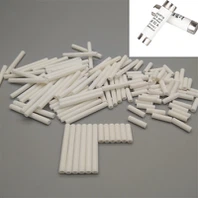
Aluminum nitride (AlN) is a highly versatile technical ceramic material renowned for its exceptional thermal conductivity. In this article, the significance of thermal conductivity, factors affecting it, measurement methods, and the applications of AlN ceramics in various industries are presented.
Significance of Thermal Conductivity
Thermal conductivity is a critical property that measures a material's ability to conduct heat. In the context of aluminum nitride, high thermal conductivity is a highly desirable attribute, as it enables efficient heat transfer and dissipation. This property makes AlN ceramics invaluable for applications involving thermal management and heat dissipation.
Factors Affecting Aluminum Nitride Thermal Conductivity
The thermal conductivity of AlN ceramics is influenced by various factors, including:
1. Purity;
Higher purity levels of aluminum nitride result in enhanced thermal conductivity. Impurities, such as oxygen and carbon, can hinder heat transfer and reduce thermal conductivity.
2. Grain Size;
Smaller grain sizes in the microstructure of aluminum nitride promote increased thermal conductivity. Fine-grained materials exhibit improved heat transfer efficiency due to reduced phonon scattering.
3. Temperature;
The thermal conductivity of aluminum nitride is temperature-dependent. Generally, thermal conductivity decreases with increasing temperature due to increased phonon-phonon scattering.
4. Porosity;
Porosity within the aluminum nitride structure can impede heat transfer and lower thermal conductivity. Dense, void-free materials exhibit superior thermal conductivity.
5. Doping.
The addition of dopants, such as silicon or yttrium, can alter the thermal conductivity of aluminum nitride. Doping can modify phonon scattering and affect heat conduction properties.
Measurement Methods of Thermal Conductivity
The thermal conductivity of aluminum nitride can be determined using various experimental techniques, including:
1. Laser Flash Analysis;
This method involves subjecting a thin sample of AlN ceramic to a short-duration laser pulse and measuring the temperature rise. By analyzing the temperature response, the thermal diffusivity and thermal conductivity can be calculated.
2. Transient Plane Source (TPS) Technique;
In this method, a TPS sensor is placed between two surfaces of AlN, and a heat pulse is applied. The resulting temperature change across the sensor is used to determine the thermal conductivity.
3. Comparative Techniques;
Thermal conductivity can also be estimated by comparing the measured properties of AlN samples with known thermal conductivities. These comparative techniques are less precise but provide an estimate of thermal conductivity.
Applications of AlN Ceramics
The exceptional thermal conductivity of aluminum nitride opens up a wide range of applications, including:
1. Electronic Components;
AlN ceramic is extensively used as a substrate for high-power electronic devices, such as power modules and LEDs. Its high thermal conductivity helps dissipate heat generated by these components, ensuring optimal performance and reliability.
2. Heat Sinks;
AlN-based heat sinks efficiently transfer heat away from heat-generating components, such as CPUs and power transistors. This enables effective cooling and prevents overheating.
3. Microwave and RF Components;
Aluminum nitride's high thermal conductivity makes it an ideal material for microwave and RF components, such as power amplifiers and antennas. It facilitates heat dissipation and minimizes thermal expansion mismatches.
4. Thermal Management Systems;
AlN ceramic finds applications in thermal management systems, including heat spreaders, heat pipes, and thermal interface materials. Its high thermal conductivity aids in the efficient transfer of heat in these systems.
5. Power Electronics.
Aluminum nitride's excellent thermal conductivity is advantageous in power electronics applications, such as electric vehicle powertrains and renewable energy systems. It ensures reliable operation and prolonged device lifespan.
All in all, aluminum nitride's exceptional thermal conductivity makes it a highly sought-after material for various industries requiring efficient heat transfer and thermal management. Understanding the factors influencing thermal conductivity, along with accurate measurement techniques, allows for the optimization of aluminum nitride's heat transfer capabilities.