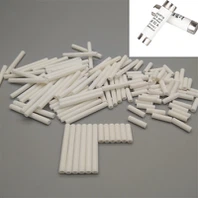
Colored zirconia shows rich colors mainly because of the addition of different rare earth elements, metal elements, oxides and other materials. Based on its good biocompatibility, excellent metallic luster, and good mechanical properties, colored zirconia ceramics have been increasingly widely used in daily life, including medical and dental restorative materials, decoration industries, and mobile smartphone terminals and other fields.
Preparation of Colored Zirconia Ceramics
The preparation of colored zirconia is essentially so that the colorant can be evenly distributed in the zirconia matrix. For composite ceramics, especially nanocomposite ceramics, due to the small particle size, large specific surface area, and large electrostatic attraction and van der Waals force between the toner particles and the zirconium oxide matrix particles, it is easy for the toner particles and the zirconium oxide matrix particles to agglomerate, which will not only cause uneven color of nanocomposite ceramics, but also affect its mechanical properties.
Hence, the key to prepare colored zirconia ceramics with excellent mechanical properties and chromaticity lies in whether the agglomeration between powder particles can be overcome. In order to prepare zirconia ceramics with good performance and various colors, a suitable dispersion method must be found. The following preparation methods are commonly used:
Solid Phase Mixing
This method is the most commonly used method in the industry for preparing colored zirconia ceramics. Oxide particles such as colorants and mineralizers are mixed and ball-milled with stable zirconia nanopowder according to a certain chemical ratio. The solid particles are then It is refined during this process, and phenomena such as micro-cracks, lattice distortion, and surface energy increase that are beneficial to realizing low-temperature chemical reactions occur. It has the advantages of simple process, low cost, convenient operation, and easy industrialization. However, this method cannot overcome the problem of nanoparticle agglomeration.
Chemical Co-Precipitation
This method is to use zirconium salt, stabilizer salt and colored ion salt solution to mix, react with alkali or carbonate, etc. to jointly generate hydroxide or carbonate precipitation, and then heat and decompose to obtain zirconium oxide composite powder. . The process is relatively complex, but the powder obtained has high purity and excellent performance. At the same time, attention must be paid to the formation of hard agglomerates when using the chemical precipitation method.
Liquid Phase Infiltration
The advantage of this method is that the colorant ions can be evenly dispersed in the zirconia matrix, and composite materials and gradient materials can be prepared at the same time. In addition, injection molding can be used to obtain zirconia green bodies of different shapes, and then colored zirconia ceramics of different shapes can be prepared through liquid phase infiltration.
Sintering of Colored Zirconia Ceramics
The sintering method also affects the performance and color of colored zirconia ceramics. With the cross-discipline and the improvement of scientific and technological level, in addition to traditional sintering methods, many new sintering methods have emerged:
Spark Plasma Sintering
The biggest influence of this method on the toughness of zirconia ceramics is the sintering temperature, followed by the sintering time. After testing, the optimal sintering temperature is 1400°C and the optimal sintering time is 5 minutes. The zirconia ceramics sintered by this method have high hardness and fracture toughness.
Microwave Sintering
Microwave sintering has irreplaceable advantages over traditional sintering methods. It is an overall heating method. The material converts the absorbed microwave energy into intermolecular kinetic energy and thermal energy to achieve the effect of overall heating of the material. The internal temperature gradient of the material is small, so it rarely causes cracking of the material due to uneven heating. . The physical properties of zirconia prepared by this sintering method are better.
Color Classification of Colored Zirconia Ceramics
Red System
Some studies have found that iron oxide (Fe2O3) is used as a colorant and 3YSZ is used as a matrix to prepare orange-red colored zirconia ceramics. The redness value can reach up to 20, and accompanied by a high yellowness value, its color is not It cannot meet the red requirement, and the addition of iron oxide greatly reduces the mechanical properties of the 3YSZ system, greatly limiting its industrial application. Therefore, red ceramics have become the rarest type of ceramics that cannot be mass-produced.
Black System
Since the chemical raw material cobalt oxide is scarce and expensive, in order to reduce costs, people use cobalt-free black zirconia ceramic colorants prepared from MnO2, Fe2O3, and Cr2O3 as raw materials to burn spinel in three different colors, that is, dark Brown ferrochrome spinel, dark red ferromanganese spinel, dark green chromium manganese spinel. By adjusting the proportion of ingredients to control the content of each spinel, and the three colors interact with each other, a stable black colorant can be produced, which greatly reduces the cost and improves economic benefits.
Blue System
At present, blue ceramic pigments mainly include vanadium-zirconium blue material as colorant, cobalt-aluminum spinel, nickel-aluminum spinel and spinel-type colorants that use other ions to replace the cobalt ion position, hexaaluminate Related colorants represented by salt and lanthanum colorants, on the basis of ensuring color rendering performance and mechanical properties, continue to explore environmentally friendly and economical blue colorants are still the focus of current research directions.