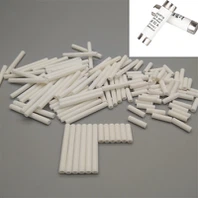
Ceramic substrates are widely used in various industries, including electronics, aerospace, automotive, and telecommunications. These substrates provide excellent thermal, electrical, and mechanical properties, making them ideal for applications that require high-performance and reliability. This article provides an overview of the manufacturing process of ceramic substrates.
Material Selection
The first step in the manufacturing process is selecting the appropriate ceramic material for the substrate. Common materials used include alumina (Al2O3), aluminum nitride (AlN), silicon carbide (SiC), and beryllium oxide (BeO). The material selection depends on the specific application requirements such as thermal conductivity, electrical insulation, and mechanical strength.
Powder Preparation
The selected ceramic material is usually in the form of a powder. The powder preparation involves several stages, including grinding, mixing, and blending. The raw materials are carefully measured and mixed to achieve a homogeneous composition. The resulting mixture is then subjected to grinding processes to reduce the particle size and ensure uniformity.
Forming
The ceramic powder is transformed into a green body through various forming techniques. The most commonly used methods are:
1. Dry Pressing;
In this method, the ceramic powder is placed in a mold and compressed under high pressure to form a compact shape.
2. Isostatic Pressing;
The ceramic powder is placed in a flexible mold, and pressure is applied uniformly from all directions using fluids or gases.
3. Slip Casting.
A slurry is prepared by suspending the ceramic powder in a liquid medium. The slurry is poured into a mold, and the liquid is gradually removed to form a solid green body.
Drying
After forming, the green bodies undergo a drying process to remove the excess moisture and improve their strength. Drying can be done using natural methods such as air drying or through controlled heating in ovens.
Firing
The dried green bodies are subjected to a high-temperature firing process called sintering. Sintering involves heating the green bodies to a temperature below the melting point of the ceramic material. The particles bond together, and the green body shrinks, resulting in a dense and solid ceramic substrate. The sintering temperature and time depend on the specific material and desired properties.
Machining
Once the ceramic substrates are sintered, they undergo various machining processes to achieve the desired dimensions and surface finish. This may include cutting, grinding, drilling, and polishing. Precision machining techniques are employed to ensure tight tolerances and smooth surfaces.
Surface Treatment
To enhance the performance and compatibility of the ceramic substrates, surface treatments are applied. This can involve coatings, such as metal or dielectric layers, to improve electrical conductivity or insulation. Other treatments may include surface cleaning, etching, and metallization to facilitate the attachment of electronic components.
Quality Control
Throughout the manufacturing process, rigorous quality control measures are implemented to ensure the ceramic substrates meet the required specifications. This includes inspecting the raw materials, monitoring the forming and firing processes, conducting dimensional and electrical tests, and performing visual inspections.
Overall, the manufacturing process of ceramic substrates involves a series of steps, from material selection to quality control. Each stage requires precision and expertise to produce ceramic substrates with the desired properties and performance. By understanding this process, manufacturers can develop high-quality ceramic substrates that meet the diverse needs of various industries.