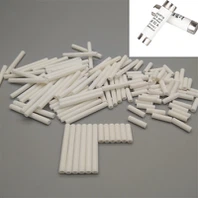
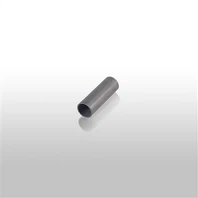
Ceramic ferrules are an important component of optical fiber connectors that are used in fiber-optic communication systems. They are designed to align and protect the fragile fiber ends while ensuring low insertion loss and high return loss. The manufacturing process of ceramic ferrules involves several steps, including material preparation, molding, sintering, and polishing.
Material Preparation
Material preparation is the first step in the manufacturing process of ceramic ferrules. The material used is typically zirconia, a type of ceramic that is known for its high strength, toughness, and corrosion resistance. Zirconia is available in several grades, each with different levels of purity and grain size. The material is carefully inspected and weighed before being mixed with a binder and a plasticizer to form a uniform mixture.
Forming Process
The next step is the molding process. The mixture is formed into a cylindrical shape by passing it through a die using a hydraulic press. The die is designed according to the required dimensions of the ferrule. The inner diameter of the ferrule is designed to fit the fiber, while the outer diameter is designed to fit the connector body.
Sintering
Sintering is the process of heating the molded ceramic ferrules to high temperatures in order to convert the mixture into a solid ceramic. The molded ferrules are placed in a furnace and heated to a temperature of around 1,500°C for several hours. During sintering, the binder and plasticizer are burned off, and the zirconia particles fuse together to form a dense ceramic structure. The sintering process is critical to the performance of the ferrules as it determines the density, strength, and dimensional accuracy of the ceramic.
Polishing
After sintering, the ferrules are inspected and cleaned to remove any residual materials. The next step is polishing, which is a critical step in the ferrule manufacturing process. Polishing is a mechanical process that involves removing any surface defects, such as cracks, scratches, or pits, from the ceramic surface. This is done by using a series of abrasive powders of decreasing particle size to gradually smooth the surface of the ferrule.
Applying A Metal Coating
The final step is to apply a metal coating to the ferrule surface. The metal coating serves to protect the surface from abrasion and corrosion, and also improves the electrical conductivity of the ferrule. The most common metals used for coating are nickel, gold, or platinum. The metal coating is applied using an electroplating process, which involves immersing the ferrules in a solution containing metal ions and applying an electric current to deposit the metal ions onto the ceramic surface.
The manufacturing process of ceramic ferrules is a complex and multi-step process that requires high precision and careful attention to detail. The use of high-quality materials, precise molding techniques, and careful control of sintering parameters is essential to ensure the production of high-quality ferrules that meet rigorous performance standards. By following these steps, manufacturers can produce reliable and high-performance ceramic ferrules that play a critical role in the performance of fiber-optic communication systems.