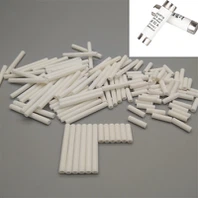
Alumina, also known as aluminum oxide (Al2O3), is a versatile and widely used material with a range of impressive properties. Understanding the material properties of alumina is crucial for optimizing its performance in different situations.
1. Mechanical Properties
Alumina exhibits excellent mechanical properties, including high hardness and stiffness. It is renowned for its hardness, second only to diamond, making it highly resistant to wear and abrasion. This property makes alumina suitable for applications involving grinding and cutting tools, where wear resistance is critical. Additionally, alumina has a high elastic modulus, providing it with stiffness and strength, making it an ideal material for structural components in demanding environments.
2. Thermal Properties
Alumina possesses remarkable thermal properties, including high thermal conductivity and resistance to thermal shock. Its high thermal conductivity makes it an effective heat conductor, which is advantageous in applications such as heat sinks for electronics and furnace linings. Alumina's resistance to thermal shock is crucial in environments where rapid temperature changes occur, as it prevents the material from fracturing or undergoing significant structural changes.
Furthermore, alumina has a relatively low coefficient of thermal expansion. This property is crucial in applications where dimensional stability is essential, especially in environments with varying temperatures. The low thermal expansion of alumina helps prevent deformation or cracking due to temperature fluctuations, enhancing its reliability in diverse applications.
3. Electrical Properties
Alumina is an excellent electrical insulator. This property, combined with its thermal conductivity, makes it suitable for various electrical applications. It is commonly used in the production of insulators, spark plug insulators, and substrates for electronic components. The electrical properties of alumina contribute to its versatility in electronic and electrical applications.
4. Chemical Properties
Alumina is chemically inert and exhibits high corrosion resistance. It is resistant to most chemicals, except for strong bases and hydrofluoric acid. This chemical stability makes alumina suitable for applications in corrosive environments, such as chemical processing and the handling of aggressive substances. Alumina's resistance to corrosion also extends its lifespan in various applications.
5. Optical Properties
Alumina is transparent in its pure form, allowing the transmission of visible and ultraviolet light. This transparency, combined with its hardness and resistance to abrasion, makes alumina suitable for optical applications. It is used in the production of lenses, windows, and other optical components.
6. Biocompatibility
In its medical and bioengineering applications, alumina is recognized for its biocompatibility. It is commonly used in orthopedic implants, such as hip joints and dental prosthetics, due to its excellent biocompatibility, low wear rates, and resistance to corrosion. The material's stability within the human body makes it a preferred choice in these medical applications.
7. Cost-Effectiveness
Alumina is relatively cost-effective compared to some other advanced ceramics. Its combination of desirable properties and reasonable cost makes it an attractive choice for a wide range of industrial applications.
In conclusion, alumina's diverse and impressive material properties make it a sought-after material in various industries. Its unique combination of mechanical, thermal, electrical, chemical, optical, and biocompatible properties allows for a broad range of applications, contributing to its widespread use in manufacturing and technology. Researchers and engineers continue to explore and develop innovative uses for alumina, further expanding its role in modern industries.