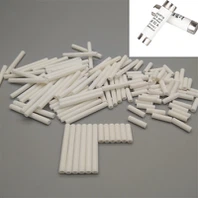
Alumina ceramic, composed primarily of aluminum oxide (Al2O3), stands out for its remarkable thermal conductivity, making it a highly sought-after material in various industrial applications. It's crucial to remember that variables like temperature, purity, and the specific alumina phase can affect thermal conductivity.
Applications of Alumina Ceramics
Alumina ceramics find extensive use in high-temperature environments and applications requiring robust thermal performance. The material's ability to maintain structural integrity and efficiently transfer heat makes it suitable for diverse industries. An alumina ceramic is used in electronics to make insulators, circuit substrates, and other parts where controlling heat is very important.
Alumina ceramics also have great mechanical strength and electrical insulation properties, which makes them more useful in a wide range of situations, from manufacturing processes to aerospace parts. The combination of these properties makes alumina ceramics a preferred choice for applications where maintaining stable thermal conditions is paramount.
It is essential for engineers, researchers, and manufacturers to consider the specific requirements of their applications and the nuances of alumina ceramics, such as the purity level and temperature conditions, to optimize their thermal conductivity. For precise information, referring to technical data provided by manufacturers or conducting specific tests may be necessary. Overall, alumina ceramics' excellent thermal conductivity is a big reason why they are used so often in fields that need to transfer heat reliably and efficiently.