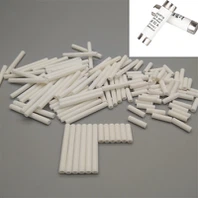
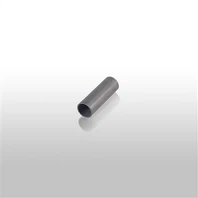
Alumina ceramic is commonly employed in various industrial applications, including electronics, automotive, aerospace, and medical fields. The unique properties of alumina ceramic make it an excellent choice for demanding environments where high performance and reliability are essential.
Wear and Abrasion Resistance
Alumina ceramic exhibits high hardness and strength, making it suitable for applications where wear resistance and durability are crucial. It has a hardness level comparable to that of sapphire and ruby, and its mechanical strength is retained even at elevated temperatures. This material is known for its excellent abrasion resistance, which is particularly valuable in applications such as cutting tools, pump components, and wear-resistant linings.
High Thermal Conductivity
Alumina ceramic possesses remarkable thermal properties, including high thermal conductivity and resistance to thermal shock. Its high thermal conductivity allows efficient heat dissipation, making it suitable for applications such as heat sinks in electronics and components in high-temperature environments. Additionally, alumina ceramic exhibits low thermal expansion, contributing to its ability to withstand rapid temperature changes without cracking or breaking.
Excellent Electrical Insulator
The electrical properties of alumina ceramic make it a preferred choice in various electronic and insulating applications. It is an excellent electrical insulator with high dielectric strength, making it suitable for use in insulating components and substrates for electronic devices. Moreover, alumina ceramic has good resistance to electrical wear and is often used in electrical contacts and insulating components in high-voltage applications.
Chemical Resistance
Alumina ceramic is chemically inert and resistant to corrosion, making it suitable for applications in harsh chemical environments. It does not react with most acids, bases, or organic solvents, which enhances its durability and longevity in chemical processing and laboratory applications. This corrosion resistance also makes alumina ceramic a preferred choice for components used in the handling and processing of corrosive substances.
Biocompatibility
In medical and dental applications, alumina ceramic is valued for its biocompatibility. It is non-toxic and non-reactive with bodily fluids, making it suitable for use in implants, dental prosthetics, and medical tools. The biocompatibility of alumina ceramic reduces the risk of adverse reactions within the human body, contributing to its widespread use in the healthcare industry.
Machinability of Alumina Ceramics
While alumina ceramic is known for its hardness and wear resistance, it can be challenging to machine due to its brittleness. However, advanced manufacturing techniques, such as diamond grinding and laser machining, have been developed to address these challenges. Proper machining methods ensure precise shaping of alumina ceramic components, expanding its applicability in various industries.
Optical Properties
Alumina ceramic also exhibits favorable optical properties, such as high transparency in the visible and infrared regions of the electromagnetic spectrum. This transparency makes it suitable for optical components and windows in certain applications. Additionally, the material's hardness contributes to its scratch resistance, making it ideal for optical systems where surface integrity is critical.
Material Properties of 95% and 99% Alumina Ceramics

Overall, as technology and manufacturing processes continue to advance, alumina ceramic is likely to play an increasingly important role in meeting the demands of diverse and challenging engineering applications.