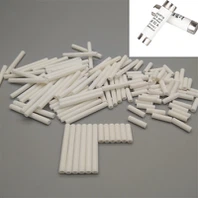
Zirconia, also known as zirconium dioxide (ZrO2), is a versatile ceramic material that exhibits excellent mechanical properties, making it highly valuable for various industrial and biomedical applications. Its mechanical properties are attributed to its unique crystal structure and the ability to undergo phase transformations under certain conditions.
Hardness and Wear Resistance
Zirconia is renowned for its exceptional hardness, which is comparable to that of tungsten carbide. This high hardness contributes to its excellent wear resistance, making it suitable for applications where materials are subjected to abrasive wear, such as in cutting tools and medical implants. Zirconia's hardness is a result of its crystal structure, which resists deformation under applied stress.
Strength and Toughness
Zirconia exhibits high flexural strength and toughness, making it a robust material for structural applications. The presence of certain stabilizing oxides in zirconia ceramics helps enhance its toughness by promoting a transformation toughening mechanism. This mechanism involves the stress-induced transformation of the tetragonal phase to the monoclinic phase, absorbing energy and preventing crack propagation.
Fracture Toughness
The fracture toughness of zirconia is significantly higher than traditional ceramics like alumina. This property is crucial for preventing catastrophic failures in structural components. Zirconia's ability to undergo stress-induced phase transformations contributes to its enhanced fracture toughness, making it a preferred material in demanding applications where resistance to crack propagation is essential.
Young's Modulus
Zirconia possesses a high Young's modulus, indicating its stiffness and ability to resist deformation under an applied load. This property makes it suitable for applications requiring dimensional stability and structural integrity. The high modulus of zirconia also contributes to its effectiveness in dental applications, where it is used as a strong and durable replacement for natural teeth.
In conclusion, zirconia's exceptional mechanical properties make it a highly sought-after material in diverse fields such as engineering, dentistry, and biomedicine. Its unique combination of properties positions zirconia as a versatile ceramic with wide-ranging applications in demanding environments.