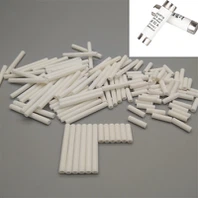
Ceramic substrates are often used in electrical applications due to their high-temperature resistance, good electrical insulation, and durability. Some key characteristics and advantages of ceramic substrates include:
Thermal Stability
Ceramics can withstand high temperatures without deformation or degradation. This property is essential in electronic applications where components may generate heat.
Electrical Insulation
Ceramics are typically excellent insulators, preventing the unwanted flow of electric current between different components on a substrate.
Mechanical Strength
Ceramics are rigid and mechanically robust, providing structural integrity to electronic devices.
Chemical Inertness
Ceramics are often resistant to chemical corrosion, adding to their durability in various environments.
Dielectric Properties
Ceramics can be designed with specific dielectric properties, making them suitable for use in capacitors and other electronic components.
Dimensional Stability
Ceramics maintain their shape and dimensions even under varying environmental conditions, contributing to the reliability of electronic devices.
Common types of ceramics used for substrates include alumina (aluminum oxide), aluminum nitride, and silicon nitride. The choice of ceramic material depends on the specific requirements of the application, such as thermal conductivity, electrical properties, and cost considerations.
To sum up, a ceramic substrate is a base material made of ceramic that is used in electronics to give different parts a stable, heat-efficient, and electrically insulating place to sit.