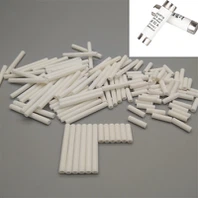
Oxide ceramics are a class of advanced materials characterized by their composition, which primarily consists of metal elements bonded with oxygen. The term "oxide" refers to the presence of oxygen in the chemical structure, forming compounds known as metal oxides. These ceramics exhibit a wide range of properties and find diverse applications across various industries.
Alumina (aluminum oxide, Al2O3), zirconia (zirconium oxide, ZrO2), magnesia (magnesium oxide, MgO), and titania (titanium oxide, TiO2) are the metal oxides that are most often found in oxide ceramics. Each oxide ceramic has unique properties that make it suitable for specific applications.
Properties of Oxide Ceramics
High Melting Point
One of the key characteristics of oxide ceramics is their high melting points. This property makes them suitable for applications involving extreme temperatures, such as in the aerospace and automotive industries. Alumina, for example, is widely used for its high melting point and exceptional hardness. It finds applications in cutting tools, abrasives, and insulators.
High Hardness and Wear Resistance
The hardness and wear resistance of oxide ceramics are particularly noteworthy. Zirconia, for instance, exhibits high strength and toughness, making it suitable for applications where wear resistance is crucial. It is used in cutting tools, bearings, and components subjected to high mechanical stress.
Electrical Insulation
Many oxide ceramics also possess excellent electrical insulation properties. Alumina, for example, is an effective insulator, making it valuable in electronic and electrical applications. Components like insulators, substrates, and circuit boards benefit from the electrical insulating properties of these ceramics.
Corrosion Resistance
Chemical stability is also an important characteristic of oxide ceramics. Their resistance to corrosion and chemical degradation makes them suitable for harsh environments. Magnesia, with its high chemical stability, is used in refractory applications, such as furnace linings and crucibles.
Biocompatibility
In addition to their physical and chemical properties, some oxide ceramics exhibit unique characteristics that make them suitable for specific applications. Zirconia, known for its biocompatibility, is used in medical implants and dental applications. Its ability to withstand biological environments without causing adverse reactions makes it a preferred material for certain medical devices.
Oxide ceramics play a crucial role in modern technology and industry. Their excellent properties make them versatile materials for applications ranging from cutting-edge electronics to aerospace components and medical implants. The ongoing research in materials science continues to expand the possibilities and applications of oxide ceramics in various fields.