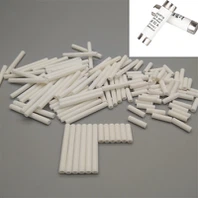
Silicon nitride (Si3N4) is a versatile ceramic material with excellent thermal properties, making it valuable for various high-temperature applications. Its unique combination of high strength, thermal stability, and low thermal expansion coefficient makes it a preferred choice in industries such as aerospace, electronics, and manufacturing. This article introduces the thermal properties of silicon nitride in detail.
Thermal Conductivity
One of the key thermal properties of silicon nitride is its high thermal conductivity. Thermal conductivity is a measure of a material's ability to conduct heat, and silicon nitride excels in this aspect. Its thermal conductivity typically ranges from 15 to 50 W/mK, depending on factors such as composition, microstructure, and processing conditions. This high thermal conductivity makes silicon nitride an excellent heat conductor, allowing it to efficiently transfer and dissipate heat in high-temperature environments.
Thermal Expansion
Silicon nitride exhibits a low coefficient of thermal expansion (CTE), which is crucial for applications where dimensional stability is essential. The CTE of silicon nitride is in the range of 2.5 to 3.5 x 10⁻⁶/°C, which is significantly lower than that of many metals and other ceramics. This low thermal expansion helps prevent the material from undergoing significant dimensional changes under varying temperature conditions, making it suitable for applications that require precision and stability.
Thermal Shock Resistance
The ability of silicon nitride to withstand thermal shock is another important thermal property. Thermal shock resistance is particularly crucial in applications where rapid temperature changes occur. Silicon nitride's high thermal shock resistance is attributed to its low thermal expansion, excellent mechanical strength, and resistance to crack propagation. This makes it suitable for applications such as high-temperature heating elements, automotive engine components, and cutting tools, where abrupt temperature variations are common.
High-Temperature Stability
Silicon nitride maintains its structural integrity and mechanical properties at elevated temperatures, making it suitable for use in high-temperature environments. It can withstand temperatures well above 1000°C without significant degradation. This stability at high temperatures makes silicon nitride valuable for applications in industries like aerospace, where components may be exposed to extreme heat during operation.
Thermal Insulation
While silicon nitride is known for its high thermal conductivity, it also possesses some thermal insulating properties. Its thermal conductivity is still lower than that of many metals, making it a good choice for applications where a balance between thermal conductivity and insulation is required. This property is beneficial in various electronic and semiconductor applications, where effective heat dissipation is crucial to prevent device overheating.
Applications of Silicon Nitride
1. Aerospace Components
Silicon nitride's high-temperature stability and mechanical strength make it ideal for aerospace components, such as turbine components, bearings, and exhaust system parts.
2. Electronics and Semiconductors
The combination of thermal conductivity and insulation properties makes silicon nitride suitable for use in electronic and semiconductor applications, including substrates, insulating layers, and packaging materials.
3. Cutting Tools
Silicon nitride's hardness and thermal shock resistance make it suitable for cutting tools in high-speed machining applications, contributing to extended tool life and improved performance.
4. Automotive Industry
Components like bearings, turbocharger components, and engine parts benefit from silicon nitride's thermal properties, contributing to improved efficiency and durability in high-temperature environments.
5. Renewable Energy
Silicon nitride is employed in components for solar cells and other renewable energy applications due to its ability to withstand high temperatures and harsh environmental conditions.
In conclusion, silicon nitride's thermal properties make it a highly desirable material for applications where heat resistance, thermal stability, and mechanical strength are critical. Its versatility has led to its widespread use in various industries, and ongoing research continues to explore new ways to harness its unique thermal characteristics for emerging technologies and applications.