Ceramic materials have been used for a myriad of applications, including in the electrical industry as conductors, insulators, and resistors. Ceramics possess unique electrical properties that differentiate them from other materials such as metals and polymers. In this article, we will examine the differences between ceramic electrical conductors, insulators, and resistors.
Ceramic Electrical Conductors
Ceramics can conduct electricity, albeit to a much lesser degree than metals. Some ceramic materials, such as ruthenium oxide and lanthanum strontium cobalt ferrites, have been found to have high electrical conductivity when processed in particular ways. Ceramic electrical conductors are used in a variety of applications, including thermocouples, heating elements, and gas sensors.
Ceramic electrical conductors are also known for their high-temperature resistance, making them ideal for use in applications that require high temperatures. For example, some ceramics, such as alumina and silicon nitride, can withstand temperatures of up to 2000°C.
Ceramic Electrical Insulators
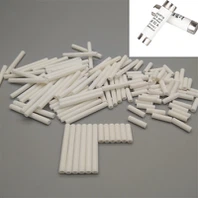
Electrically insulating ceramics are used in applications where the flow of electricity through a material needs to be prevented. These ceramics have a high resistivity, meaning they conduct electricity very poorly. In electrical applications, ceramic insulators are used to support and separate conductive parts from one another. They can also be used to insulate high voltage cables and as a material for electrically insulating coatings.
Ceramic insulators have excellent high-temperature resistance, allowing them to be used in high-temperature applications where other materials would fail. These applications include insulating material for nuclear reactors and aerospace applications.
Ceramic Resistors
Ceramic resistors are a type of electrical component that resists the flow of current through a circuit. They are used in a wide range of electronic devices, including computers, televisions, and medical equipment. Ceramic resistors come in various shapes and sizes, including axial lead resistors, surface mount resistors, and chip resistors.
Ceramic resistors are made by depositing a layer of resistive material onto a ceramic substrate. The resistive material is usually a metal oxide, such as tin oxide or ruthenium oxide. The thickness of the resistive layer determines the resistance of the resistor.
Ceramic resistors have several advantages over other types of resistors, including their stability over a wide temperature range and their ability to handle higher voltages and currents. Ceramic resistors are also highly reliable and have a long lifespan.
In summary, ceramics are widely used in the electrical industry due to their unique electrical properties. Ceramic electrical conductors, insulators, and resistors are used in a wide range of applications, from gas sensors and heating elements to high-voltage cables and electronic devices. Ceramic materials offer many advantages over other materials, including their high-temperature resistance, stability, and reliability. As technology advances, ceramics will undoubtedly continue to play a vital role in the electrical industry.