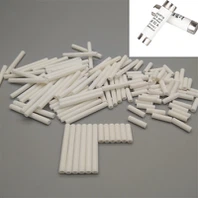
Cutting an alumina ceramic tube is a task that requires precision, patience, and the right tools. Alumina ceramic tubes are commonly used in various industries, including aerospace, medicine, chemical processing, and electronics. They are desirable due to their high thermal and mechanical stability, electrical insulation, and resistance to corrosion and wear. However, creating precise cuts in these tubes can be challenging due to their hardness and brittleness.
Prepare Necessary Tools and Equipment
Before beginning the process of cutting an alumina ceramic tube, it is essential to gather the necessary tools and equipment. These include a diamond saw blade, a cutting fluid (such as water or oil), a vise or clamp, and goggles to protect the eyes from the ceramic particles and debris that will be generated during the cutting process. It is also advisable to use gloves and a mask to prevent inhalation of dust.
One of the primary tools needed for cutting the aluminium oxide ceramic tube is a diamond saw blade. Diamond saw blades are available in various sizes and types, and selecting the right blade for the job is crucial. The blade should have a fine grit to achieve a smooth cut surface, and a continuous rim design will prevent chipping and cracking of the ceramic material. The blade should also be compatible with the saw machine being used.
Clamp Alumina Ceramic Tube Securely
To begin the cutting process, the alumina ceramic tube should be securely clamped in a vise or clamp. It is essential to ensure that the tube is held firmly but not so tight that it will break. If a vise or clamp is not readily available, a manual pipe cutter or a tubing cutter can also be used.
Apply Cutting Fluid to Ceramic Tubes and Diamond Saw Blades
Secondly, the cutting fluid should be applied to the ceramic tube and the diamond saw blade. The fluid helps to cool the blade and lubricate the cutting area, reducing friction and extending the life of the blade. Water or oil can be used as a cutting fluid, depending on personal preference and the materials being cut.
Cutting of Alumina Ceramic Tubes
Once the blade is lubricated, the saw machine should be started, and the blade should be brought slowly into contact with the ceramic tube. The blade should be guided carefully along the desired cutting line, exerting light pressure and allowing the saw blade to do the cutting work adequately. It is important to take breaks frequently to allow the blade to cool down and prevent it from overheating.
The cutting speed should be consistent and slow, ensuring an even cut along the entire length of the ceramic tube. The saw blade should be held at a steady angle to avoid producing rough or jagged edges. The cutting process can be time-consuming, depending on the thickness of the tube and the size of the blade being used. However, with patience and care, precise cuts can be achieved.
Once the cut is complete, the ceramic tube should be removed from the vise or clamp and examined for any rough or sharp edges. If necessary, the edges can be smoothed with sandpaper or a deburring tool. Care should be taken to avoid over-sanding or creating uneven surfaces that could compromise the integrity of the ceramic tube.
To sum up, cutting an alumina ceramic tube requires careful preparation, patience, and the right tools. A diamond saw blade, a cutting fluid, a vise or clamp, and protective goggles are essential tools for the task. The blade should have a fine grit and a continuous rim design, and it should be compatible with the saw machine being used. The cutting process should be slow, consistent, and steady to ensure an even cut along the length of the tube. Finally, the edges should be examined and smoothed if necessary, taking care to avoid compromising the integrity of the ceramic tube. With these steps, precise cuts can be achieved in ceramic tubes made of alumina, making them suitable for a range of technical applications.