Processes of Hot Isostatic Pressing
Creation of Green Body
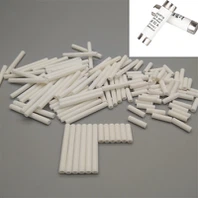
The HIP process begins with the creation of a "green body." This green body is a preliminary form of the ceramic material, compacted and shaped to the desired specifications. However, it is not fully dense and may contain pores or voids. The green body serves as the starting point for the HIP process, where its structure will be refined and strengthened.
Put Green Body into Sealed Chamber
The green body is carefully loaded into a sealed chamber designed to withstand high temperatures and pressures. The chamber is then filled with an inert gas, such as argon or helium, to create an environment devoid of reactive elements, particularly oxygen. This oxygen-free environment is essential for preventing oxidation and ensuring the integrity of the ceramic material during the high-temperature processing.
A Controlled Heating Process
Subsequently, the chamber undergoes a controlled heating process. The temperature is raised to a level just below the melting point of the ceramic material, typically ranging from 800 to 1600 degrees Celsius. This elevated temperature serves a dual purpose: allowing for plastic deformation of the material without causing it to liquefy and initiating a process known as sintering. Sintering involves the bonding of adjacent particles in the ceramic, resulting in increased density and improved mechanical properties.
Pressurize by Isostatic Pressure
Concurrently with the heating phase, the chamber is pressurized in an isostatic manner. Isostatic pressure ensures uniform compression from all directions, a critical factor in achieving consistent density and properties throughout the ceramic material. The applied pressure facilitates the closure of pores within the green body, effectively eliminating defects and contributing to the overall densification of the material.
Holding the Temperature and Pressure
The ceramic material is then held at the elevated temperature and pressure for a predetermined duration. This holding time is a crucial stage in the HIP process, allowing for the rearrangement of atoms and the reduction of porosity. The duration of this phase is carefully controlled and optimized based on the specific characteristics and requirements of the ceramic material.
A Controlled Cooling Process
Following the holding time, the chamber undergoes a controlled cooling process. This slow cooling is necessary to keep the material from developing thermal stresses, which is what keeps the final ceramic product's structure intact. The controlled cooling also contributes to the refinement of the microstructure, further enhancing the mechanical properties of the ceramic.
Advantages of Hot Isostatic Pressing
The advantages of Hot Isostatic Pressing for ceramics are extensive. One of the primary benefits is the significant improvement in density, as the process effectively reduces or eliminates porosity within the material. This leads to enhanced mechanical properties, including increased strength, hardness, and resistance to wear. Additionally, HIP enables the production of intricate and complex ceramic shapes that may be challenging to achieve through traditional manufacturing methods.
Applications of Hot-Isostatic-Pressed Ceramics
The applications of ceramics processed through HIP are diverse, ranging from aerospace components to medical implants. In the aerospace industry, ceramics with improved mechanical properties are crucial for manufacturing components that can withstand extreme conditions, such as high temperatures and corrosive environments. In the medical field, the biocompatibility and mechanical strength of ceramics processed through HIP make them suitable for applications like hip implants and dental prosthetics.
In conclusion, Hot Isostatic Pressing stands as a transformative technology in the realm of ceramic processing, offering a path to superior material properties and expanding the horizons of ceramic applications across various industries. The HIP process carefully controls temperature, pressure, and time to make ceramics that meet strict performance standards. It is a key part of the progress in ceramic materials and their use in important applications.