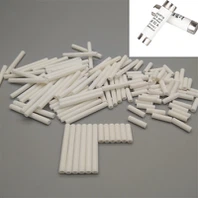
Ceramic plungers play a vital role in various industries, especially in applications where high pressure, wear resistance, and corrosion resistance are crucial factors. Choosing the right ceramic material for plungers is essential for ensuring optimal performance and longevity.
Alumina (Al2O3)
Alumina, also known as aluminum oxide, is a widely favored ceramic material for plungers due to its exceptional combination of mechanical strength, high hardness, and excellent chemical resistance. Its fine microstructure and high density make it suitable for applications where wear resistance and dimensional stability are critical. Alumina plungers find extensive use in industries requiring reliable performance under demanding conditions.
Applications of Alumina Plungers
1. Piston Pumps
Alumina plungers are employed in piston pumps for their ability to withstand high pressure and abrasion, ensuring smooth and efficient operation.
2. High-Pressure Water Systems
Alumina's resistance to wear and corrosion makes it an excellent choice for plungers used in high-pressure cleaning systems, where exposure to abrasive media is common.
3. Chemical Processing Equipment
In aggressive chemical environments, alumina plungers maintain their integrity, providing reliable performance in chemical processing applications.
Zirconia (ZrO2)
Zirconia is a ceramic material known for its exceptional fracture toughness and resistance to thermal shock. It exhibits a unique phase transformation behavior, allowing it to resist cracking or chipping even under extreme stress conditions. Zirconia plungers are favored for applications that demand reliability under high mechanical loads, making them an excellent choice for critical systems.
Applications of Zirconia Plungers
1. Reciprocating Pumps
Zirconia plungers find extensive use in reciprocating pumps, where they provide durability and resistance to wear, ensuring consistent performance over time.
2. Valve Components
Due to its high mechanical strength and resistance to wear, zirconia is utilized in valve components, contributing to the longevity and reliability of the system.
Silicon Carbide (SiC)
Silicon carbide is a high-performance ceramic material renowned for its extreme hardness and excellent wear resistance, particularly in abrasive environments. It is well-suited for applications where exposure to harsh chemicals or abrasive media is a concern. Silicon carbide plungers are known for their extended service life and reduced maintenance requirements.
Applications of Silicon Carbide Plungers
1. Slurry Pumps
Silicon carbide plungers are widely used in slurry pumps, where they endure abrasive particles in the pumped media, extending the operational lifespan of the equipment.
2. Desulfurization Systems
Silicon carbide plungers work reliably and with little downtime in situations where harsh chemicals are used.
3. Aggressive Chemical Environments
Silicon carbide's chemical resistance makes it suitable for handling corrosive substances in a variety of industrial settings.
Silicon Nitride (Si3N4)
Silicon nitride is a high-performance ceramic material known for its exceptional combination of mechanical strength, high fracture toughness, and excellent thermal shock resistance. It is often chosen for applications where reliability under high mechanical loads and thermal stability are paramount.
Applications of Silicon Nitride Plungers
1. Bearings and Ball Valves
Silicon nitride is utilized in high-precision bearings and ball valves due to its excellent mechanical properties, providing extended service life and reduced maintenance.
2. Molten Metal Handling
In foundry operations, silicon nitride plungers withstand extreme temperatures and mechanical stresses, ensuring consistent performance in molten metal handling.
3. Non-Ferrous Metal Processing
Silicon nitride is an ideal choice for components used in non-ferrous metal processing, where resistance to wear, thermal shock, and chemical corrosion are vital.
Ceramic Material Data Sheet

In short, alumina, zirconia, silicon carbide, and silicon nitride each offers unique properties that cater to different industrial needs. Understanding these materials helps engineers and designers make best choices, ultimately optimizing the performance and longevity of their systems.