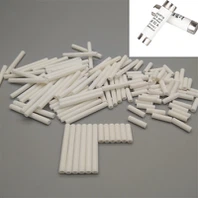
Technical ceramic materials, also known as advanced ceramics, are a diverse group of inorganic non-metallic materials with exceptional properties and applications across various industries. These materials possess a unique combination of physical, chemical, thermal, and mechanical properties that make them indispensable for a wide range of high-performance applications. In this article, some of the key types of technical ceramic materials and their remarkable properties will be explored.
Oxide Ceramics
Oxide ceramics are one of the most common types of technical ceramic materials. They are primarily composed of metallic elements combined with oxygen. Some popular oxide ceramics include aluminum oxide (alumina), zirconium oxide (zirconia), and magnesium oxide (magnesia). These ceramics exhibit excellent mechanical strength, high melting points, exceptional electrical insulation, and good corrosion resistance. They find applications in industries such as electronics, aerospace, and biomedical engineering.
Nitride Ceramics
Nitride ceramics are composed of metallic elements combined with nitrogen. Silicon nitride (Si3N4) and aluminum nitride (AlN) are prominent examples of nitride ceramics. These materials possess exceptional thermal conductivity, high strength at elevated temperatures, excellent wear resistance, and good electrical insulation properties. Nitride ceramics are commonly used in the production of cutting tools, heat sinks, and components for high-temperature applications.
Carbide Ceramics
Carbide ceramics, such as silicon carbide (SiC) and boron carbide (B4C), are renowned for their extreme hardness, excellent wear resistance, and high thermal conductivity. They are often used in abrasive applications, such as grinding wheels and cutting tools. Additionally, carbide ceramics have found extensive use in ballistic armor due to their exceptional hardness and lightweight nature.
Composite Ceramics
Composite ceramics are a combination of different ceramic materials or ceramics with other materials, such as metals or polymers. These composites exhibit tailored properties that are not achievable by individual ceramics. For example, ceramic matrix composites (CMCs) consist of a ceramic matrix reinforced with fibers, resulting in enhanced toughness and fracture resistance. These composites are utilized in demanding applications such as aerospace propulsion systems and high-performance structural components.
Glass Ceramics
Glass ceramics are a unique class of technical ceramic materials that exhibit both glassy and crystalline characteristics. They are produced by controlled crystallization of glassy materials. Glass ceramics offer exceptional thermal shock resistance, low thermal expansion, high strength, and optical transparency. These properties make them suitable for applications in cookware, dental restoration materials, and optical lenses.
Broadly speaking, technical ceramic materials encompass a wide range of compositions and properties, making them indispensable in numerous industrial sectors. The unique combination of high strength, thermal stability, wear resistance, electrical insulation, and other exceptional properties has led to their utilization in diverse applications such as electronics, aerospace, automotive, healthcare, and energy industries. The continuous advancement and development of technical ceramic materials hold great potential for addressing future technological challenges and driving innovation in various fields.