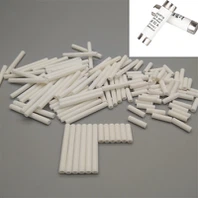
Alumina and zirconia are two ceramic materials that find extensive applications in various industries due to their unique properties. Both materials have distinct characteristics that make them suitable for different purposes, and a comparison between alumina and zirconia can help in understanding their strengths and limitations.
Properties of Alumina Ceramic
Alumina, also known as aluminum oxide (Al2O3), is a widely used ceramic material with a range of applications. It is known for its excellent mechanical and thermal properties. Alumina is highly wear-resistant, making it ideal for applications where abrasion resistance is crucial, such as in the production of wear-resistant components, cutting tools, and grinding media. Its high thermal conductivity also makes it suitable for use in high-temperature environments. Additionally, alumina has good electrical insulating properties, making it valuable in the manufacturing of electronic components.
Properties of Zirconia Ceramic
On the other hand, zirconia, or zirconium dioxide (ZrO2), is another ceramic material that stands out for its unique combination of mechanical and thermal properties. Zirconia exhibits high strength, toughness, and hardness, making it suitable for applications where these properties are essential, such as in the production of dental implants, ball bearings, and cutting tools. Zirconia also has excellent resistance to thermal shock, allowing it to withstand rapid temperature changes without cracking. Furthermore, zirconia possesses low thermal conductivity, which can be an advantage in certain insulating applications.
Key Difference
One key difference between alumina and zirconia lies in their transformation behavior under stress. Zirconia undergoes a phase transformation (tetragonal to monoclinic) when subjected to stress, leading to a phenomenon known as transformation toughening. This transformation toughening mechanism imparts additional toughness to zirconia, making it more resistant to crack propagation compared to alumina. As a result, zirconia is often preferred in applications where resistance to fracture is critical.
In summary, while both alumina and zirconia are valuable ceramic materials with excellent properties, the choice between them depends on the specific requirements of the application. Alumina is favored for its high wear resistance, thermal conductivity, and electrical insulating properties, while zirconia excels in applications where high strength, toughness, and resistance to fracture are crucial. The decision between alumina and zirconia ultimately hinges on the intended use and the specific demands of the environment in which these materials will operate.