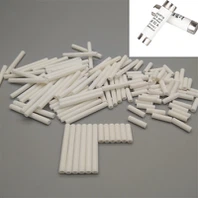
Aluminum oxide (Al2O3), commonly known as alumina, is a versatile ceramic material with a wide range of properties that make it suitable for various industrial applications. It exhibits unique characteristics that contribute to its widespread use in diverse fields. Here introduces the mechanical, thermal, electrical, and optical characteristics of Al2O3 ceramic.
1. Mechanical Properties
- Hardness
Aluminum oxide is renowned for its exceptional hardness, ranking just below that of diamond on the Mohs scale. This property makes it highly resistant to abrasion, a crucial characteristic for applications subjected to wear and friction. In industrial settings, materials exposed to abrasive wear, such as cutting tools and grinding surfaces, benefit from the hardness of Al2O3.
Strength and Stiffness
Alumina is characterized by high strength and stiffness, contributing to its suitability for structural applications. Its ability to withstand mechanical stress makes it a preferred choice in scenarios where materials need to maintain their shape and integrity under load.
Fracture Toughness
While alumina is generally a brittle material, it possesses reasonable fracture toughness, indicating a certain level of resistance to crack propagation. Engineers and material scientists often consider fracture toughness when designing components to ensure better reliability and durability.
2. Thermal Properties
High Melting Point
One of the outstanding thermal properties of aluminum oxide is its high melting point, exceeding 2,000 degrees Celsius (3,632 degrees Fahrenheit). This characteristic makes it an ideal material for applications involving high-temperature environments, such as the production of refractory materials used in kilns and furnaces.
Low Thermal Expansion
Al2O3 exhibits a relatively low coefficient of thermal expansion, meaning it expands and contracts less with changes in temperature. This property is crucial in applications where dimensional stability is paramount, preventing issues like warping or deformation due to thermal cycling.
High Thermal Conductivity
While not the highest among ceramics, aluminum oxide possesses good thermal conductivity. This property is significant in applications where efficient heat dissipation is essential, such as in certain electronic components and thermal insulators.
3. Electrical Properties
Electrical Insulation
Alumina is an excellent electrical insulator, preventing the flow of electric current. This property makes it valuable in electrical applications, where insulation is crucial to ensuring the proper functioning and safety of electronic components.
4. Chemical Properties
Chemical Inertness
Al2O3 is chemically inert, demonstrating resistance to many chemicals. This inert nature makes it suitable for applications in corrosive environments, where materials need to withstand exposure to acids, bases, and other corrosive substances.
5. Optical Properties
Transparency
In its transparent form, aluminum oxide is used in certain optical applications. Transparent alumina exhibits good optical clarity, making it suitable for windows in instruments and equipment where visibility and light transmission are essential.
Other Properties
Biocompatibility
Alumina is biocompatible, meaning it is well-tolerated by living tissues. This property makes it suitable for use in medical implants and prosthetics, where materials must interact favorably with the human body.
In conclusion, aluminum oxide (Al2O3) stands out as a ceramic material with a remarkable combination of mechanical, thermal, electrical, and optical properties, making it a preferred choice for diverse industries, whether in industrial settings, electronic devices, medical implants, or optical instruments.