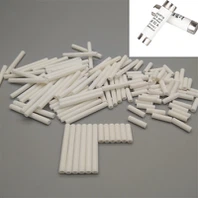
Advanced ceramics represent a class of materials that exhibit exceptional mechanical, thermal, electrical, and chemical properties. The term "advanced ceramics" encompasses various types, each tailored to specific requirements. Here are some prominent types:
1. Alumina (Al2O3)
Alumina, or aluminum oxide, is a widely used advanced ceramic. It is known for its high hardness, excellent wear resistance, and good thermal conductivity. Alumina ceramics find applications in cutting tools, ball bearings, and components subjected to high wear and abrasion.
2. Zirconia (ZrO2)
Zirconia ceramics exhibit high strength, toughness, and resistance to wear and corrosion. They are often used in medical implants, cutting tools, and components requiring high thermal and electrical insulation. Zirconia can also undergo transformation toughening, a process that enhances its toughness by inducing a crystalline transformation under stress.
3. Silicon Nitride (Si3N4)
Silicon nitride is valued for its high strength, toughness, and resistance to thermal shock. It finds applications in high-temperature environments, such as in gas turbines and automotive engines. Silicon nitride ceramics are also used in ball bearings, cutting tools, and wear-resistant components.
4. Silicon Carbide (SiC)
Silicon carbide is known for its extreme hardness, high thermal conductivity, and resistance to abrasion and corrosion. It is widely used in abrasive applications, such as grinding wheels, as well as in high-temperature and high-power electronic devices.
5. Titanium Diboride (TiB2)
Titanium diboride is recognized for its high melting point, excellent electrical conductivity, and resistance to wear and corrosion. It is used in the production of cutting tools, electrodes for metal processing, and components in harsh chemical environments.
6. Advanced Oxide Ceramics
This category includes various oxide ceramics beyond alumina and zirconia. For example, magnesium oxide (MgO) is used in refractory applications due to its high melting point and thermal conductivity.
7. Piezoelectric Ceramics
Certain ceramics, such as lead zirconate titanate (PZT), exhibit the piezoelectric effect, where they generate an electrical charge in response to mechanical stress. These ceramics are crucial in sensors, actuators, and devices like ultrasound transducers.
8. Transparent Ceramics
Some advanced ceramics, like transparent aluminum oxynitride (AlON) and yttrium aluminum garnet (YAG), are engineered to be optically transparent. These ceramics find applications in lasers, windows, and optical communication systems.
In conclusion, the diverse range of advanced ceramics reflects their adaptability to specific industrial demands. Their exceptional properties make them indispensable in cutting-edge technologies across various sectors. Continued research and development in the field of advanced ceramics promise further innovations and expanded applications in the future.