

Home/Ceramic Substrates
ONE-STOP-SHOP FOR ALL COMMON CERAMIC SUBSTRATES
LASER CUTTING AND MACHINING
METALLIZATION CERAMIC SUBSTRATES

Ceramic Substrates
Ceramic substrates can be used to manufacture various key components for electronic applications (e.g., electronic circuit carriers), which perform a permanent and safe function in various fields.
Whether for power generation, medical technology, telecommunications, consumer electronics, or electric automobile, we provide a vast variety of solutions to meet your specific needs. Ceramic substrates are widely employed due to their thermal, mechanical, chemical, and electrical insulating properties, which allow us to network the world and advance modern technologies.
Unipretec can provide all common ceramic substrates, including aluminium oxide, aluminium nitride , zirconium toughened aluminium oxide (ZTA), zirconium oxide and also silicon nitride.
In addition to the ceramic substrates, we also provide laser processing, metallization, and machining of the substrates. The overall product portfolio of ceramic materials enables our customers to purchase all primary ceramic substrates from a single manufacturer, as well as complement and simplify their supply chain based on their needs.
Aluminium Oxide Substrates
Best cost-performance ratio.
Substrate that is the most frequently used in high-performance electronics.
Applications include industrial, renewable, and electric vehicle.

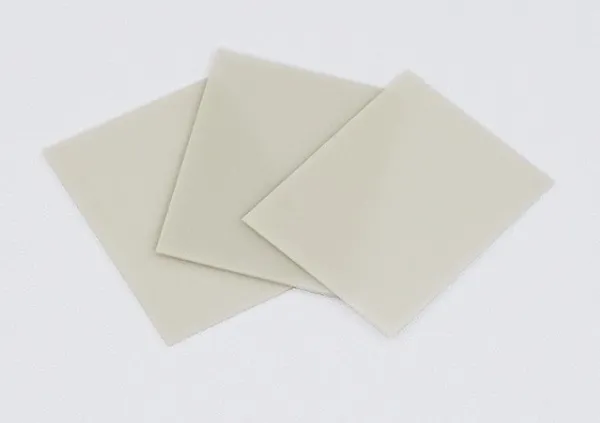
Aluminium Nitride Substrates
High thermal conductivity.
They have a CTE (Coefficient of Thermal Expansion) that is similar to silicon.
Applications include train, industrial, renewable, and LED.
Silicon Nitride Substrates
Excellent flexural strength.
High fracture toughness.
High thermal conductivity.
High-temperature stability;
Exceptional dielectric properties.
High mechanical strength and hardness;
Silicon nitride substrate is widely used in the electronics industry, especially in the production of integrated circuits, semiconductor devices and electronic packaging. It is also ideal for aerospace and automotive engine components, and is the preferred choice for optical components.

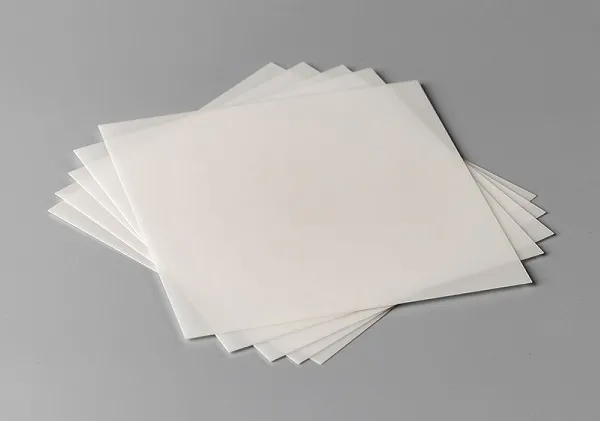
Zirconia Toughened Alumina Substrates
Improved bending strength.
Increased fracture toughness.
ZTA, or Zirconia Toughened Alumina, is a high-performance ceramic material that combines the properties of zirconia (ZrO2) and alumina (Al2O3). This unique combination results in a material with exceptional mechanical, thermal, and electrical properties, making it highly sought after in various industries.
One of the key applications of ZTA is as a substrate material in electronic components.
99.6% Alumina Ceramic Substrates
Excellent surface flatness.
High dielectric constant.
Substrate for thin film circuits.
Applications include high-power, high-frequency and high-reliability electronic components and circuit boards.

Ceramic Substrate Material Comparison
| Item | UNIT | A960 | A996 | ALN | SI3N4 |
| Main Content | - | Al2O3>96% | Al2O3>99.6% | AlN>95% | Si₃N₄ |
| Density | g/cm³ | >3.7 | >3.88 | >3.3 | >3.17 |
| Color | - | White | White | Grey | Grey |
| Water Absorption | % | 0 | 0 | 0 | 0 |
| Warpage | - | <2‰ | <2‰ | <2‰ | <2‰ |
| Surface Roughness (Ra) | um | 0.2-0.7 | <0.025 | 0.3-0.6 | <0.8 |
| Thermal Conductivity (25℃) | W/m·K | >25 | >30 | >175 | >80 |
| Thermal Expansion Coeffecient (25-300℃) | 10-6mm/℃ | 6.5-7.5 | <7.2 | 2-3 | 11-13 |
| Thermal Expansion Coeffecient (300-800℃) | 10-6mm/℃ | 6.5-8.0 | <7.5 | 2.5-3.5 | 11-13.5 |
| Max. Working Temperature | ℃ | 1,200 | 1,200 | 1,200 | 1,200 |
| Dielectric Strength | KV/mm | >17 | >17 | >17 | 19 |
| Dielectric Constant | 1 MHz | 9-10 | 9.9 | 17 | 7.8 |
| Electrical Resitivity (25℃) | Ω·mm |
>1014 |
>1014 | >1014 | >1014 |


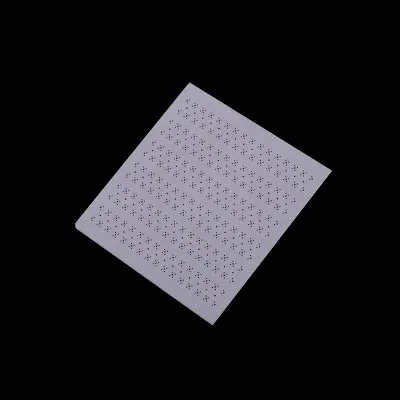
Lasered and Metallised Substrates
Depending on the application, material, geometry, and quantity of pieces, Unipretec manufactures and processes ceramic substrates utilizing a variety of techniques, including punching, lasering, dry pressing, and various fine machining procedures.
In addition, Unipretec offers Direct Bond Copper (DCB) products and Direct Plated Copper (DPC) on alumina and aluminum nitride. This powerful combination enables us to develop unique solutions to meet a variety of needs.We offer DBC substrates and DPC substrates—from prototype up to medium-volume production runs—with a fast turnaround.

Performance & Advantages
Optimized Thermal Management
Our ceramic substrates have excellent thermal conductivity and a high specific heat capacity, which can improve heat management. Additionally, our techniques also enable customers to integrate thick copper metallization (DCB, AMB, or SMB), which effectively dissipates heat to the heat sink.
Superior Electromagnetic Property
Because of its exceptional magnetic permeability, the magnetic force effect is unaffected and is not decreased by the ceramic material.
High Thermal Conductivity
Our ceramic materials, including silicon nitride (Si3N4), zirconia toughened alumina(ZTA), aluminum oxide (Al2O3), and aluminum nitride (AlN), have remarkable thermal conductivity.
Ceramics achieve excellent heat dissipation in comparison to plastics because of the extraordinary lattice vibrations (phonon resonance). These characteristics make ceramics a great option for heat-sensitive applications.
High Mechanical Resistance
Our substrates are characterized by their high elastic stiffness and mechanical resistance. Together with their great hardness and wear resistance, they provide outstanding strength under compressive stress. Our materials maintain their shape and properties even when exposed to high temperatures, and their density is lower than metals.
Electrical Insulating Capacity
Ceramics have an exceptional electrical insulation capacity due to their maximum volume resistivity.
High Dielectric Constant
Ceramics have a high dielectric constant because of their remarkable polarizability in an electric field.
High-Frequency Capability
The ceramic materials' excellent suitability for applications in the high frequency range is guaranteed by their low dielectric loss, or tan delta. It is critical for a material to possess a low dielectric loss in order to minimize energy loss and minimize the attenuation of high frequency signals. This increases the efficiency and performance of high frequency components and systems.
contact information
If you have any questions about products or services, please contact us immediately and we will reply to you within the first time
No.153, Yuehua Road, Huli District, Xiamen, China
86 18650119402
info@unipretec.com
A good organization must provide high-quality standards, This is why we decided to obtain GB/T19001-2016/ ISO9001:2015 certification. And our ceramic substrates are all ROHS compliant.


