Products


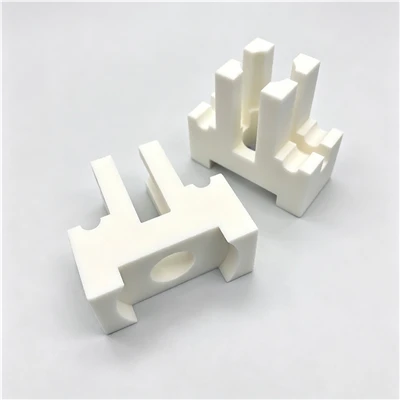
Alumina Crucible
- Metal melting and casting;
- Heat treatment and annealing;
- Chemical analysis and research;
- Semiconductor manufacturing;
- Glass processing.
Send Inquiry
Product Introduction
In the realm of high-temperature applications, the alumina crucible stands as a stalwart companion for scientists, engineers, and artisans alike. Crafted from alumina (Al2O3), a ceramic material known for its formidable heat resistance and chemical inertness, this crucible plays an indispensable role in various scientific and industrial processes. This article delves into the intricacies of the alumina crucible, elucidating its properties, applications, and proper handling.
Properties of Alumina Crucibles
1. High-Temperature Resistance
One of the hallmark characteristics of alumina crucibles is their ability to withstand extreme temperatures. This property is invaluable in processes such as metal melting, calcination, and sintering, where temperatures can soar to several thousand degrees Celsius.
2. Chemical Inertness
Alumina's remarkable chemical inertness ensures that it does not react with most substances. This property is of paramount importance in applications where purity and non-contamination of the processed material are critical.
3. Thermal Conductivity
With commendable thermal conductivity, alumina crucibles facilitate even heat distribution, a crucial factor in processes where temperature uniformity is imperative.
4. Electrical Insulation
Alumina exhibits excellent electrical insulation properties. This feature proves vital in experiments or applications where electrical resistance is desired, safeguarding against unwanted electrical interactions.
Material Properties of Alumina Crucible

∆ The above data is offered for reference and comparison only, exact data will vary depending on manufacturing method and part configuration.
Applications of Alumina Crucibles
1. Metal Melting and Casting
Alumina crucibles find extensive use in metallurgical processes. They serve as vessels for melting and casting non-ferrous metals like gold, silver, and other precious alloys. Their ability to withstand the high temperatures required for these processes makes them indispensable tools for artisans and jewelers.
2. Heat Treatment and Annealing
Industries involved in metalworking and ceramics frequently employ alumina crucibles for heat treatment and annealing operations. These crucibles provide a controlled environment for processes like hardening, tempering, and stress relieving.
3. Chemical Analysis and Research
Laboratories rely on alumina crucibles for a myriad of experiments. From ashing and fusion procedures to chemical reactions necessitating elevated temperatures, these crucibles serve as reliable vessels for conducting a wide array of experiments.
4. Glassworking
The production of glass and glass products is another domain where alumina crucibles play a pivotal role. Their high-temperature resistance and chemical inertness make them ideal vessels for melting and shaping glass.
5. Semiconductor Manufacturing
In the semiconductor industry, precision and purity are paramount. Alumina crucibles are favored for processes involving the growth of single crystals, epitaxial deposition, and other semiconductor fabrication techniques.
Handling and Maintenance
While alumina crucibles are robust, they can be brittle and susceptible to thermal shock. Therefore, it is imperative to follow proper handling and heating procedures. Gradual heating and cooling are recommended to minimize the risk of cracking or fracturing.
Cleaning alumina crucibles is a straightforward process. Mild detergents and non-abrasive cleaners are usually sufficient. However, caution should be exercised with strong acids or alkalis, as they may compromise the crucible's integrity.
Conclusion
In the realm of high-temperature applications, the alumina crucible reigns supreme as a reliable and versatile tool. Its impressive properties, including high-temperature resistance, chemical inertness, and thermal conductivity, render it indispensable in a wide array of scientific and industrial processes. From metal casting to semiconductor fabrication, its applications span diverse industries, underscoring its significance in modern manufacturing and research. Proper handling and maintenance ensure that this crucible continues to serve as an invaluable asset to scientists, engineers, and artisans across the globe.
Hot Tags: alumina crucible, China, suppliers, manufacturers, factory, wholesale, price, for sale
Previous:
Alumina Ceramic Components
Next:
Alumina Tube Double Bore
Send Inquiry